Sun-dried tomatoes are ripe tomatoes, usually San Marzano, halved, salted and dried until only the concentrated flesh is left. This guide covers how they are made in the sun, in the oven or in a dehydrator, how to put them under oil safely, how to soften them, how to store them and how to cook with them, the way it is done in Puglia.
Sun-dried tomatoes are one of the treasures of Mediterranean cooking, loved for their intense flavour and their versatility. Here is everything about them: how they are made, how they are used, how to keep them, and where to find the best Apulian sun-dried tomatoes.
What sun-dried tomatoes are
Sun-dried tomatoes are ripe tomatoes dried to remove most of their water, though not all of it, which is the secret behind their pleasant, meaty chew. What remains is the concentrated flesh. Traditionally they are dried in the sun, but today they can also be made in the oven or in a dehydrator. They are linked to the regions of southern Italy, where the hot climate has favoured this way of preserving them for centuries. Puglia is one of them: every summer it produces a great deal of fresh tomatoes and of dried ones.
You may not know that every year countless lorries loaded with fresh tomatoes leave Puglia for canneries in other regions, such as Campania, which buy them to make products like passata, the smooth, sieved tomato sauce that Italian kitchens use all year.
Concentration explains everything. Drying takes away almost all the water in a fresh tomato and leaves the solids: sugars, natural acids, lycopene, minerals and aromas. That is why a dried tomato tastes so intense, and why a few pieces are enough to flavour a whole dish.
Which tomatoes to dry
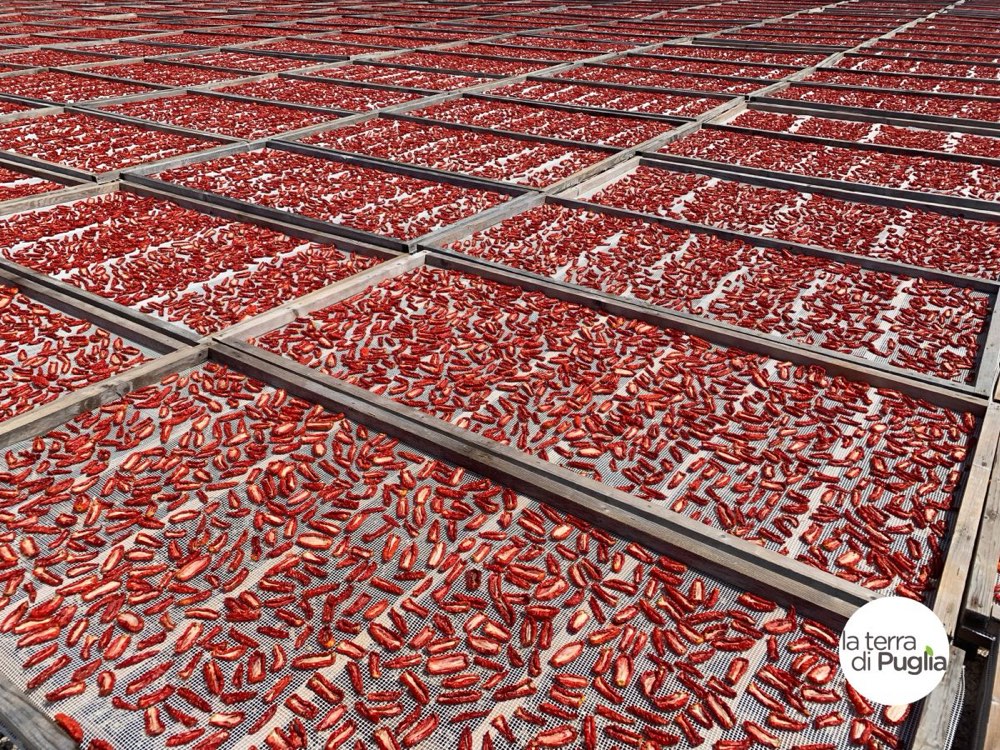
As you may have noticed, sun-dried tomatoes are often long in shape. Cherry tomatoes work well and give a sweet result, but the San Marzano is the variety most often chosen for drying. Here are the ones best suited to it:
- San Marzano: the classic, with dense flesh and few seeds.
- Datterini: small “date” tomatoes, very sweet, good for quick drying.
- Cherry tomatoes: sweet and full of flavour, an excellent result.
- Roma: fleshy and low in water.
In general you can get a good dried tomato from any variety, as long as it is fully ripe.
How sun-dried tomatoes are made
The traditional method is to cut the tomatoes in half, salt them lightly and leave them to dry in the sun on racks for several days, covered with gauze against insects and brought indoors at night to protect them from damp. It should take a week to ten days, but it all depends on the latitude and on how strong and hot the sun is. In Puglia the summer sun is very hot, which shortens the drying, and that is an advantage, because a long spell in the open air can encourage mould.
Otherwise, you can use an oven or a dehydrator.
Can you dry tomatoes in the oven?
Yes, the oven is a good alternative at home. Lay the cut tomatoes on a tray lined with baking paper, sprinkle them with salt and dry them at 90 to 100°C with the door slightly open for about 6 to 8 hours, turning them halfway through. Some recipes suggest 60°C for longer.
How long does drying take?
- In the sun: 5 to 10 days
- In the oven: 6 to 12 hours
- In a dehydrator: 8 to 10 hours
Step by step: drying your own tomatoes
- Wash the fresh tomatoes and dry them well.
- Cut them in half lengthways.
- Remove the excess seeds.
- Lay them on a rack or on baking paper.
- Sprinkle with coarse salt.
- Dry them in the sun, in the oven or in a dehydrator.
- Once dry, let them cool and store them in an airtight container or under oil.
Sun-dried tomatoes under oil
- Blanch the dried tomatoes for 1 to 2 minutes in equal parts water and vinegar.
- Dry them well with a clean cloth.
- Pack them into sterilised jars with garlic, capers, oregano, basil and chilli.
- Cover them completely with Apulian extra virgin olive oil: in preserves, the oil is an ingredient that counts.
- Keep the jars in a cool, dark place.
- Make sure the tomatoes are well dried and fully covered with oil, to avoid mould or contamination.
Why the vinegar blanching matters. Blanching the tomatoes in water and vinegar before they go under oil is not only about softening them. It makes them more acidic, and acidity is what holds back bacteria, including Clostridium botulinum, the cause of botulism: below a pH of 4.6 it cannot produce its toxin. Dried tomatoes on their own have a variable pH, not always low enough. The vinegar is the key precaution for home preserves under oil, so do not skip it even if the tomatoes already look dry enough.
The same logic, acidify first and then cover with oil, is used for other Apulian vegetables under oil, such as artichokes in oil. You will find more jars to fill in our Apulian preserves.
How to soften them, with or without boiling
- With boiling: drop them into boiling water for 5 to 10 minutes.
- Without boiling: soak them in lukewarm water or in vinegar for 20 to 30 minutes. Some people use wine; it is a matter of taste. Vinegar, in general, adds a pleasant tang.
Once softened, drain them and use them as you like.
How to store sun-dried tomatoes
Dried tomatoes keep very well. This is how to carry the taste of summer well into winter:
- in airtight jars;
- under oil;
- vacuum-packed.
Stored properly they last several months. Beware of damp and mould. In jars that have been opened, remember to top up the oil, adding good oil so that the tomatoes stay completely covered.
How to cook with sun-dried tomatoes
Dried tomatoes have many uses: you can serve them as a simple side or make them the heart of all sorts of tasty dishes. A few ideas:
- Pasta
- Risotto
- Starters
- Salads
- Pestos and sauces
- Pizza and focaccia
- Meat or fish dishes
In general they go well with fresh cheeses, olives, capers and tuna. They are also excellent on frise, the twice-baked Apulian bread rings that are dipped in water and then dressed.
Recipes with sun-dried tomatoes
Starters
Perfect on bruschetta, in small savoury pastries, frittatas, mousses, savoury brioche or quiche. Also good with burrata or hummus.
Pasta with sun-dried tomatoes
One of the best-loved recipes: simple, tasty and quick. Just toss them in a pan with garlic, oil and chilli. They can also be added whole once the pasta is cooked.
A sauce with sun-dried tomatoes
For pasta or gnocchi. Add olives, capers and an onion base for a rich sauce. Also good in Sicilian-style spaghetti, or in sweet-and-sour sauces with raisins and pine nuts.
Calabrian and Neapolitan style
- Calabrian style: with ‘nduja (a soft, spicy spreadable pork sausage), red onion and pecorino.
- Neapolitan style: with anchovies, black olives and parsley.
Sun-dried tomato pesto
A creamy sauce of dried tomatoes, almonds or walnuts, basil, Parmesan and oil. Perfect with short pasta.
More ideas
- Sun-dried tomato risotto
- Chicken tagine with sun-dried tomatoes
- Steamed sea bass with chopped sun-dried tomatoes
Sun-dried tomatoes from Puglia
Apulian sun-dried tomatoes are known for their intense flavour, the quality of the raw tomatoes and the craft of their making. Dried in the southern sun, they are one of the region’s food specialities.
Would you rather have them ready? Our sun-dried tomatoes under extra virgin olive oil are dried in the Salento sun and shipped directly from Puglia. If you prefer to dress them yourself, there are also plain sun-dried tomatoes by the kilo.
Frequently asked questions
How do you rehydrate sun-dried tomatoes?
Soak them in lukewarm water for 30 minutes, or in water and vinegar, until they are soft again.
How do you soften them?
Besides lukewarm water, you can use a mix of water and vinegar. Leave them to soak for at least 20 minutes.
How do you store them?
Keep them in tightly closed glass jars in a cool, dry place. If they are under oil, make sure they are always completely covered.
How do you wash them?
Rinse them under running water to remove any salt or residue before using them or putting them to soak.
Are they good for you?
They contain antioxidants such as lycopene, and vitamins A and C.
How do you avoid botulism in tomatoes under oil?
Sterilise jars and lids, use vinegar when blanching, store the jars somewhere cool and make sure there are no air bubbles. The aim is to create an environment in which the spores cannot develop. For more detail, follow the official guidelines on botulism in home-made preserves.